
Bionics
A high performing prosthesis is group of components that work well together. The human body is complex and replacing something like a foot that has 26 bones with 33 joints and varying leg part can be tricky. Our decades of experience and real-world prosthesis use have honed our expertise in component combinations with the optimum socket style. We take the time to understand your daily mobility needs to configure the best prosthetic solution designed just for you. Amputees working for Amputees.
A good prosthesis has:
- Stable, safe gait with a natural walking motion
- Reliable on varying terrains and steps
- Comfortable range of motion for sitting, kneeling, & traversing uneven terrains
- Natural movement that prevents strain on the sound leg or other body parts like a knee or hip
- Appropriate energy rebound that helps compensate for the muscle loss and fatigue
Prosthetic Socket:
It all starts with a custom socket that contacting your residual limb to your prosthesis for a solid foundation. These are custom made to fit only you and can have features that allow for some adjustability.
Common Prosthetic Sockets
Subischial (Above Knee)

- Brimless Socket Design for improved range of motion
- Adjustable Femoral Panel for improved stability and control of prosthesis
- Custom Flexible Inner Socket for improved comfort and allowance for muscle contraction
- Panel Adjustable Socket for volume management
Containment (Above Knee)

- Compliant flexible inner socket for improved comfort
- Posterior removal of carbon frame for improved sitting ability
- Ramal containment region for maximum stability and control
- Distal femur fenestration for improved comfort on cut end of bone
Vacuum (Below Knee)

- Ultra-light carbon fiber material with custom frame design
- Textured flexible socket for improved grip and eliminating undesired movement
- Improved knee bending with flexible panel stops bunching around the knee
- Vacuum suspension prosthesis for improved comfort and control
Adjustable (Below Knee)
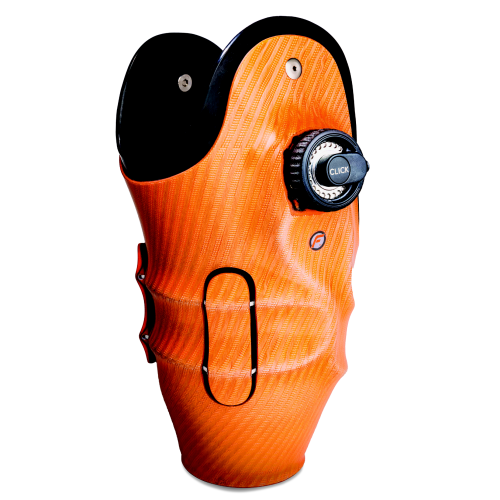
- Adjustable panel for volume management and claudication pain management
- Lowered anterior trimline for increased kneeling ability
- Internal sleeve
- Flexible inner socket/volume adjustment frame
Running Prosthesis

- Posterior and distal mount foot applications
- Multi-density interface materials to increase comfort with higher impact with great energy return that helps prevent exhaustion
- Adjustable alignment feature to account for speed and strength training
- Split toe design to improve ground compliance while turning
Flexible Socket Technology

- Thermoplastic, foam, urethane resin, and rolled silicone materials
- Frame designs matched to patients’ skeletal anatomy allowing for full range of motion
- Cushioned brim or interface to improve comfort with higher impact
- Fenestrations and low-density voids to improve compliance with sitting and uneven terrain